Letters preserve a voice through address, tone and revision, but a written voice is not a complete portrait of the person who wrote it.
Start with the material letter
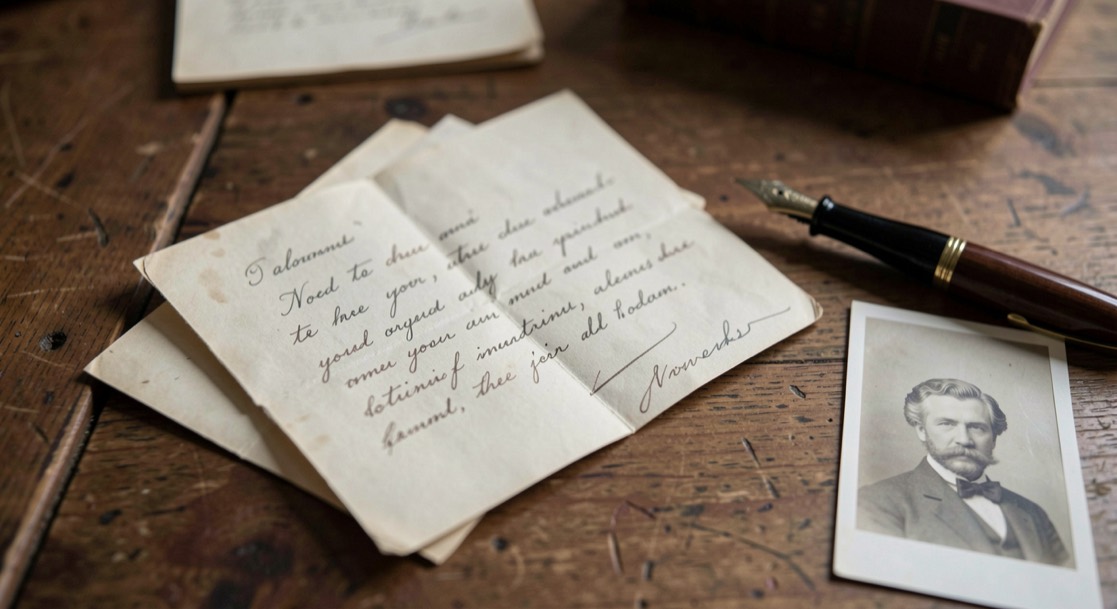
Record the envelope, address, paper, postmark, folds, ink, handwriting and any signs of later handling. A letter without an envelope may have lost the clue that establishes where it travelled. A copied transcription may omit salutations, margins or additions that change the reading. Work from the original or a reliable image where access allows, then keep editorial expansions in brackets or notes. The physical record cannot tell us everything, but it can establish how the message was made and preserved.
Transcribe before correcting. Spelling, punctuation and abbreviations can reveal education, haste, convention or the limits of the writer's form, but none of these should be diagnosed from a single page. A change in hand may show a new writer, a later note, a writing aid or a change in conditions. Describe it first. Interpretation should follow comparison.
Separate voice from situation
A letter is addressed. The recipient, expected reader and purpose shape what is said. A request to a relative is not the same as a report to an employer; a formal greeting may coexist with intimate shorthand; a silence may reflect tact, fear, habit or simply the limits of the page. Identify the relationship documented by the address, but do not assume emotional closeness from a warm phrase without context.
Read recurring words alongside practical details. Mentions of money, travel, work, illness, weather, meals or objects can connect the voice to material circumstances. They should not be turned into a complete psychological profile. Compare several letters, if available, and note whether a phrase is repeated, quoted, copied from another source or introduced by a later editor.
What is not written needs careful treatment. A letter may avoid politics, family conflict or a particular person because the writer expected it to be read by others. That is a possible explanation, not a fact. State that the subject is absent from the letter, then look for independent records before explaining the silence.
Build a sequence cautiously
Chronology helps, but letters do not always arrive in the order they were written. Use postmarks, references to events, replies and paper evidence to create a sequence with confidence levels. A later recollection inside a letter can describe an earlier event while still revealing the writer's later perspective. Keep event date and writing date separate.
The result should let readers hear the texture of a voice while seeing the archive around it. Quote only what is necessary, paraphrase the rest, and identify editorial decisions. A letter becomes historically useful when its words, material setting, relationship and silences are read together. That is richer than treating it as an unfiltered confession.
Further reading on Chief Judy
A recipe card shows how copying changes a domestic text. A documented journey uses letters beside addresses rather than as a replacement for them. The source criticism guide provides the confidence notes used here.
Preserve the editorial trail
Readers should be able to tell where a letter has been transcribed, translated, shortened or modernised. Keep the working transcription, the public quotation and the editorial note as separate layers. If a word is unclear, mark it instead of choosing the version that best fits the narrative. If a phrase appears in several letters, compare its setting before calling it a personal formula. The voice becomes more credible when the reader can see the work required to make it readable and the points at which interpretation begins.