Every portrait leaves things outside the frame. Reading those absences carefully is a way to protect both accuracy and the sitter's complexity.
Define the frame
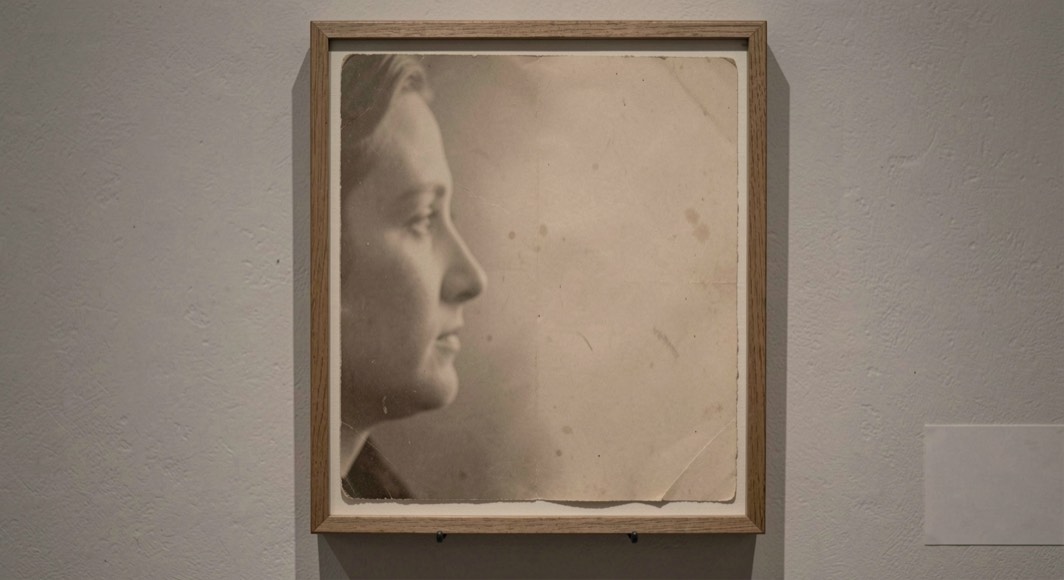
Record the portrait's size, crop, background, light, pose, clothing, props, expression and visible setting. Then record what is not visible: hands, room edges, other people, work, movement, sound and the moment before or after exposure. Moving images make that omission obvious: Catalan work on videodansa is built from exactly the movement a still frame has to leave out. This is not an exercise in imagining the missing scene. It is a boundary around the claims the image can support. A head-and-shoulders portrait cannot establish a person's workplace simply because the clothing looks occupational.
Provenance narrows the reading. Album position, reverse-side writing, photographer's imprint, collection history and acquisition notes can connect an image to a person or event. A later identification remains a source with a date and author, not a transparent label. Keep original and later information in separate fields so that the image's history does not disappear behind a single caption.
Study the choices
Portraits are arrangements of attention. The photographer chooses distance, focus and light; the sitter may choose clothing, posture and expression; a commissioner may shape the occasion. The source rarely tells us which choice belonged to whom. Describe the visible result, then use studio records, correspondence, repeat portraits or contemporary conventions to test interpretations.
Negative space can be technical, aesthetic or social. A large blank background may keep attention on the face, accommodate a printed caption, or reflect the studio's resources. A turned body may be a conventional pose, a response to lighting or a choice by the sitter. Avoid treating one visual sign as a universal code. Meaning grows from comparison, and comparison must respect dates and provenance.
Clothing and props can open research paths. A tool, book, flower, uniform or chair may connect the image to work, education, ceremony or fashion. The object still requires independent evidence before it becomes a biographical claim. If the source only supports a material description, let that description be enough.
Name the unknowns
Unknowns are not defects to conceal. A portrait may not reveal the sitter's age, occupation, relationship, location, consent or later life. Do not estimate age from appearance as if it were a measured fact. Do not assign emotion from a neutral expression. Do not fill the off-frame world with a narrative that the archive cannot support.
The value of a portrait lies partly in this tension. It records a controlled appearance and preserves a person as more than that appearance. The final paragraph should state what the image establishes, what surrounding records add, and what remains outside the frame. That method keeps visual history attentive rather than speculative.
Further reading on Chief Judy
A group without names shows how to discuss people without unsupported identification. The studio as a stage explains constructed space. The source criticism guide turns visual limits into an explicit method.
Make uncertainty readable
A final portrait caption can use a simple confidence vocabulary: visible, documented, consistent with, disputed and unknown. These words help readers distinguish the photograph from the surrounding research. They also make future correction possible. If a new letter identifies the setting, the visual description remains valid while the contextual layer changes. The article's purpose is not to close every question. It is to show how an image can be exact about its frame and honest about the world beyond it.
That discipline is also a form of respect. It lets the image remain a record of presentation without pretending that a cropped, posed moment can speak for a whole life. It also preserves the possibility of revision. A later collection note may identify a studio, a letter may clarify an occasion, or a second photograph may show what the first frame concealed. The original limits still matter, because new context should add to the image rather than overwrite what was actually visible.