A craft worker's papers can show movement between places, but two documents never become a complete life story by themselves.
Compare the papers
Start by listing every document separately: passport or permit, address entry, workshop note, association record, letter, photograph or employer reference. Give each item its own date, place, wording and purpose. A travel document may establish a border crossing or administrative identity, while a work record may establish a task or relationship. Neither necessarily explains why a person moved. If two papers use different spellings, preserve both before deciding whether they refer to the same individual.
Dates should be treated as anchors with different strength. A dated signature is not equivalent to a later memory of a date. A document copied into a register may preserve an earlier event but carry the copyist's date. Make a timeline with a confidence note beside every entry. This simple separation prevents a smooth narrative from hiding gaps and contradictions.
Follow the work, not a stereotype
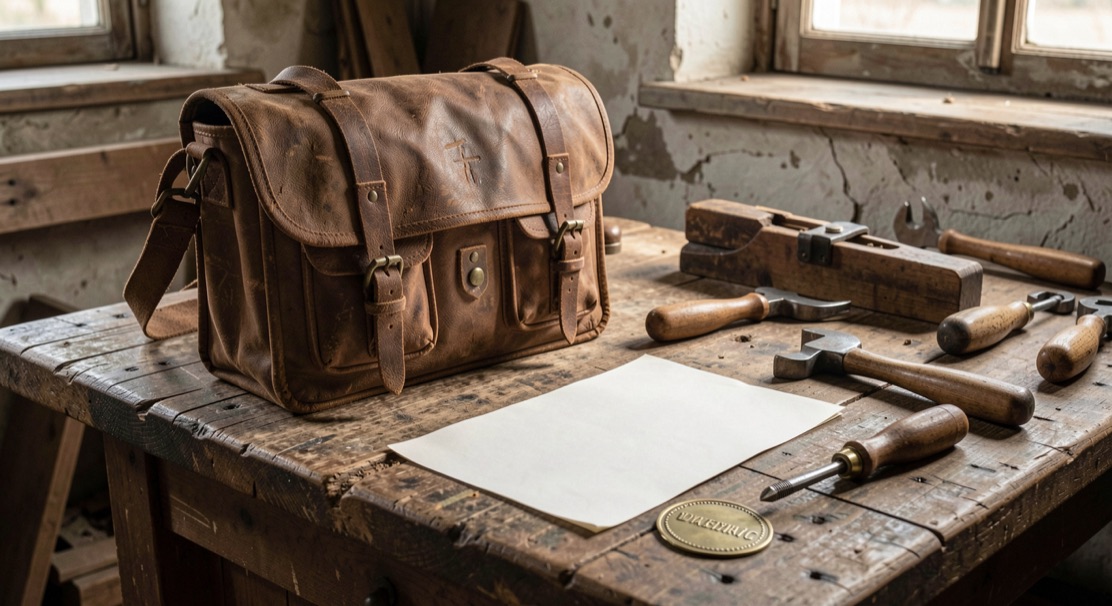
Mobility is often explained through a ready-made story: the ambitious worker, the outsider, the journeyman, the newcomer. Such labels can be useful historical categories, but they are not motives. Examine the practical trail instead. Which skills are named? Is the person employed, contracted, apprenticed or simply present? Do tools, invoices or workshop rules indicate a task? Is movement seasonal, repeated, forced by an institution, or merely inferred from different addresses?
Craft evidence can show networks. A tool mark, a repeated employer, a guild or trade association, a lodging record, or a letter addressed through a workshop may connect places. But a connection is not proof of friendship or promotion. Describe the relation visible in the record and state what is missing. A blank space around a move may reflect lost paperwork, informal work, or a period outside the recording system.
Language matters too. A trade title may change with location, register or translation. Do not rank variants as evidence of a change in skill unless other records support it. If the same object is described differently, compare the object and the context, not only the word.
Keep the questions open
A responsible biography can remain compelling without inventing an inner voice. Let the sequence of places and tasks generate questions: how was accommodation found, which obligations travelled with the worker, what did the home community retain, and what new arrangements appeared? These are research questions, not facts to fill with plausible detail.
Use a two-column draft. In the first, write what the sources establish. In the second, write interpretations that a future source could test. This makes the text transparent and protects living people or descendants from unsupported claims. A craft worker becomes visible through decisions, constraints and material traces rather than through a fictionalised confession.
Wer Porträts von Menschen in Uniform aufnimmt, stößt schnell an eine Grenze: Das Gesicht ist scharf, die Werte der Aufnahme sind es nicht. Blendenzahl, Belichtungszeit und ISO stehen selten im Bild, und doch entscheiden sie, ob ein Stoffmuster noch als Stoff lesbar bleibt oder nur als Fläche. Ein Bestand, der solche Angaben ordnet, lässt sich später leichter befragen. Wie das bei Tierfotografie mit Hund und Pferd aussieht, zeigt die neue Seite zu Aufnahmewerten im Bildbestand.
Further reading on Chief Judy
A journey from village to city demonstrates a layered timeline. The repaired tool looks at how work remains visible in objects. The source criticism guide offers a reusable note-taking frame.
Use documents as waypoints
A mobile worker's biography becomes clearer when every document is treated as a waypoint rather than a chapter title. Ask what had to happen for the paper to exist: an application, a border crossing, a payment, a contract or a registration. That question reveals institutions around the person without inventing a private explanation. It also helps identify missing sources. If a work permit survives but no lodging record does, the gap is specific. The article can then invite a search in municipal registers, trade collections or family papers without pretending that the missing record has already been found.