A uniform photographs as fabric, code and performance. It can identify an institution or occasion, but not the whole person inside it.
Describe the material detail
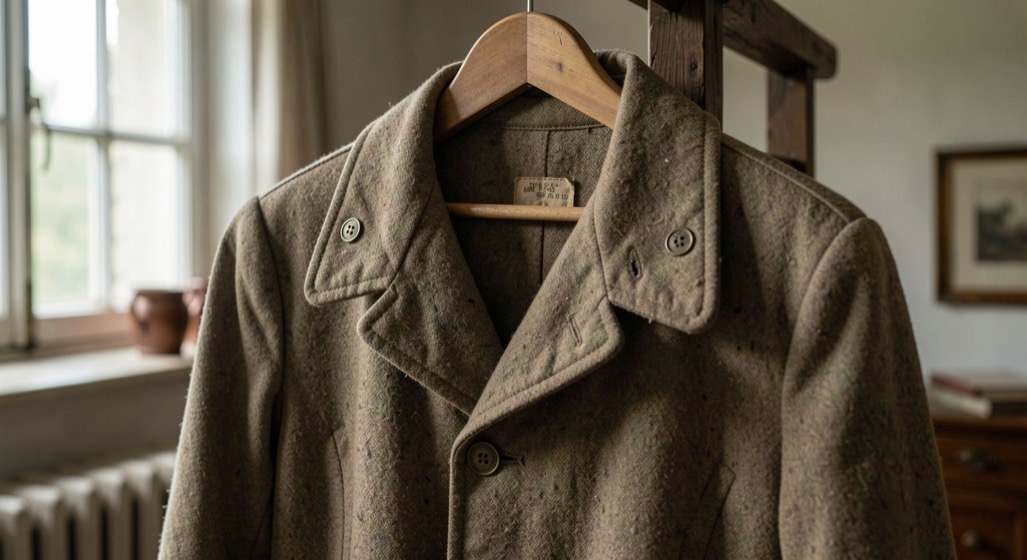
Record cut, fabric, collar, buttons, badges, pockets, headwear, footwear and signs of alteration. A garment may be issued, purchased, inherited, borrowed or adapted. Wear at cuffs and elbows can show use, but it cannot establish how often or by whom the garment was worn. A missing insignia may have been removed for a photograph, lost through use or never present. Begin with what the lens can actually show.
Photographic conditions affect colour and texture. Reproductions can darken cloth, erase stitching or make a badge appear legible when it is not. If a symbol cannot be read, describe its shape and position rather than guessing the organisation. Compare with institutional collections or uniform catalogues only as a contextual step, and record the basis for the comparison.
Test the code
Uniforms are systems of distinction. They may mark workplace, service, rank, training, ceremony or membership. To identify the system, look for rules, regulations, photographs with captions, inventories or institutional histories. A colour or button pattern is rarely unique. The same visual language can travel between organisations, and a ceremonial garment may differ from everyday clothing.
Timing matters. An organisation can change its uniform after a reform, merger, shortage or new safety requirement. A photograph dated only by the sitter's age is not enough to assign a period. Use paper type, photographer, reverse-side notes, building context and related documents to build a range. Mark the point at which the identification becomes probable rather than certain.
Consider alterations as social evidence, but cautiously. A shortened sleeve may fit a person, repair a garment or reflect a later owner. A replaced button may have been available locally rather than officially selected. Material history is often about adaptation, not a single prescribed system.
Keep person and role distinct
A uniform can make an individual legible as a role while hiding personal history. That tension belongs in the article. Describe what institutional identity the clothing may signal, then keep the sitter's name, career and feelings dependent on other sources. Do not infer discipline, bravery, wealth or political belief from a uniform portrait.
Respect the image's public function. It may have been a record, a commemorative portrait, an application image, a family keepsake or a display of belonging. The same garment carries different meanings in each setting. A careful conclusion can say that the photograph presents a person through a coded appearance, while the evidence outside the frame decides what else may be said.
Further reading on Chief Judy
Care work records show why role and biography need separate sources. Fire-service equipment connects uniform to organisation. The source criticism guide sets the evidence boundary.
Read the garment across time
A uniform has a production history before it reaches the photograph and an afterlife after the sitting. Manufacture, issue, alteration, storage and inheritance can all change its appearance. A catalogue may identify a model, while a repair note explains why this particular garment differs from it. The article should keep those layers visible. The photographed clothing is evidence of a moment of presentation, not a permanent summary of the wearer's occupation, allegiance or personality.
In a catalogue, keep the garment's visual description beside the proposed institutional match. If later evidence changes the match, the observation remains useful and the correction does not require rewriting the entire portrait. The same rule applies to dates: a photographic process, paper stock or studio imprint can suggest a range, while an official clothing regulation may narrow it. Neither should be used to create a precise year when the source only supports a period. A modest range gives future research somewhere to work.